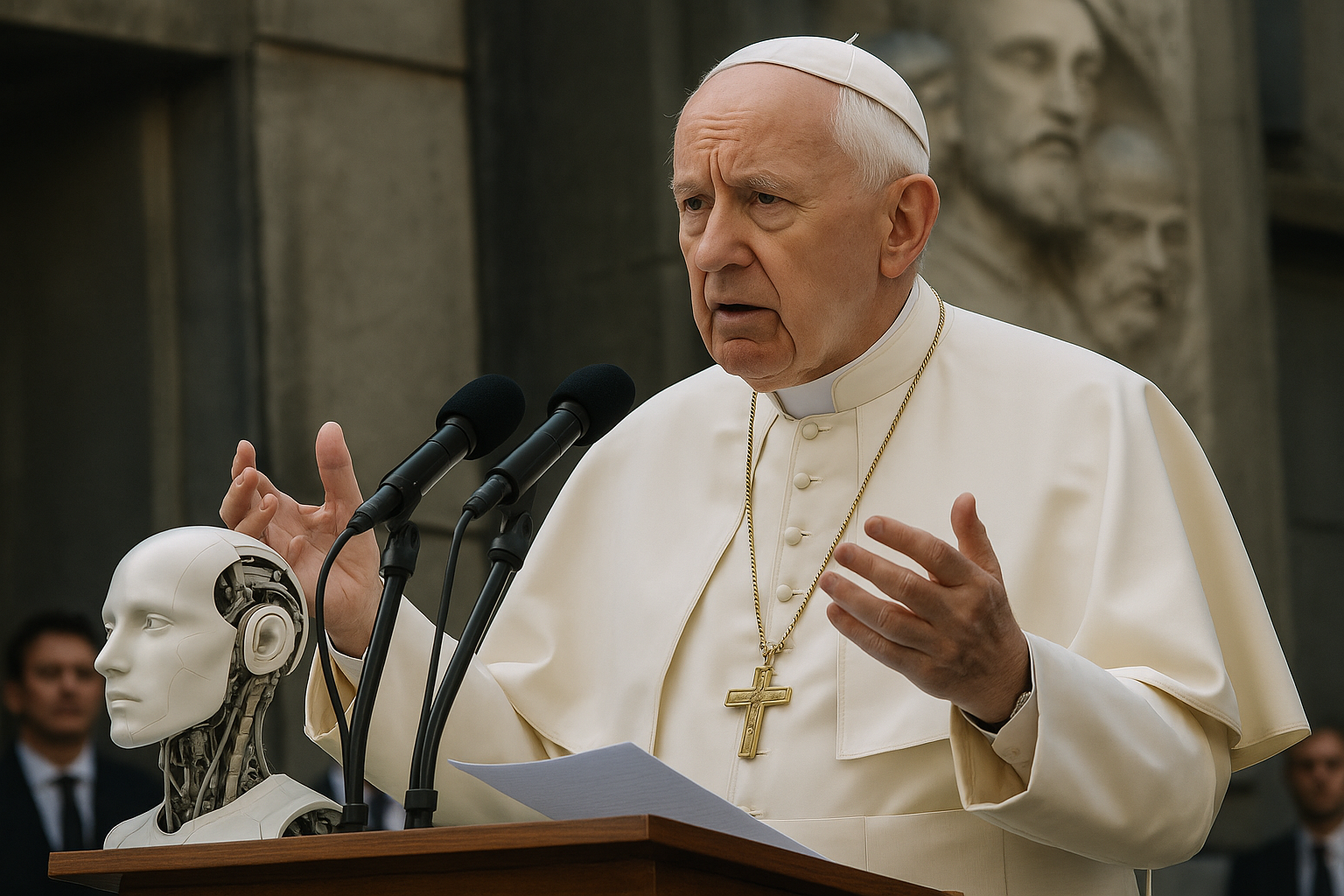
On May 25, 2026, Pope Leo XIV released his inaugural encyclical, Magnifica Humanitas (Magnificent Humanity), addressing the profound ethical and societal challenges posed by artificial intelligence. In this sweeping manifesto, the Pope called for robust regulation of AI and emphasized that its developers must act in service of the common good rather than private profit (apnews.com).
He denounced the concentration of power and data in the hands of a few private entities, warning that such centralization poses risks to vulnerable populations, including children, and can lead to dehumanization and exclusion (apnews.com). The encyclical explicitly stated that it is “not permissible” to entrust irreversible, lethal decisions to AI systems, signaling a clear ethical boundary against autonomous weapons (apnews.com).
Pope Leo XIV further argued that invoking ethics in the abstract is insufficient. He called for concrete measures: robust legal frameworks, independent oversight, informed users, and political systems that uphold responsibility rather than abdicate it (apnews.com). He urged developers and policymakers to slow down and reflect, grounding their choices in ethical and spiritual values that prioritize human dignity and the common good over profit and power (apnews.com).
This encyclical positions the Vatican as a moral authority in the global AI debate, drawing parallels between the AI revolution and the Industrial Revolution, and framing Magnifica Humanitas as a modern counterpart to Rerum Novarum—a foundational document in Catholic social teaching (apnews.com).
Ethical Analysis
The Pope’s call for robust regulation of AI and its developers raises several critical ethical considerations:
Concentration of Power and Data The encyclical highlights the ethical dangers of centralizing AI capabilities in the hands of a few powerful entities. This concentration can undermine democratic accountability, exacerbate inequality, and erode social solidarity. Ethical governance must therefore include mechanisms to decentralize control, ensure transparency, and empower public oversight.
Autonomy and Human Oversight By declaring lethal autonomous decisions impermissible, the Pope underscores the moral imperative of preserving human agency in life-and-death matters. This aligns with broader ethical frameworks that emphasize meaningful human control over AI systems, especially in high-stakes domains such as warfare and criminal justice.
From Abstract Ethics to Enforceable Norms The encyclical’s insistence on legal frameworks and independent oversight reflects a recognition that ethical principles must be operationalized through enforceable norms. This approach bridges the gap between moral ideals and practical governance, demanding accountability, auditability, and public participation in AI regulation.
Human Dignity and the Common Good At its core, the document reaffirms that technological progress must serve human flourishing, not undermine it. This principle challenges prevailing market-driven narratives that prioritize efficiency or profit. Instead, it calls for a reorientation of AI development toward enhancing human dignity, social justice, and collective well-being.
Historical Continuity and Moral Authority By framing Magnifica Humanitas as a modern analogue to Rerum Novarum, the Pope situates AI ethics within a longstanding tradition of Catholic social teaching. This historical continuity lends moral weight to the encyclical and invites policymakers, technologists, and civil society to engage with AI governance not merely as a technical issue, but as a profound moral and social question.
Conclusion
Pope Leo XIV’s encyclical represents a significant ethical intervention in the global discourse on AI. By calling for robust regulation, human-centered development, and enforceable oversight, it challenges both developers and policymakers to reimagine AI not as a tool of domination or profit, but as a means to uphold human dignity and the common good. The document’s moral clarity and institutional authority may serve as a vital reference point for shaping more just and humane AI governance frameworks.