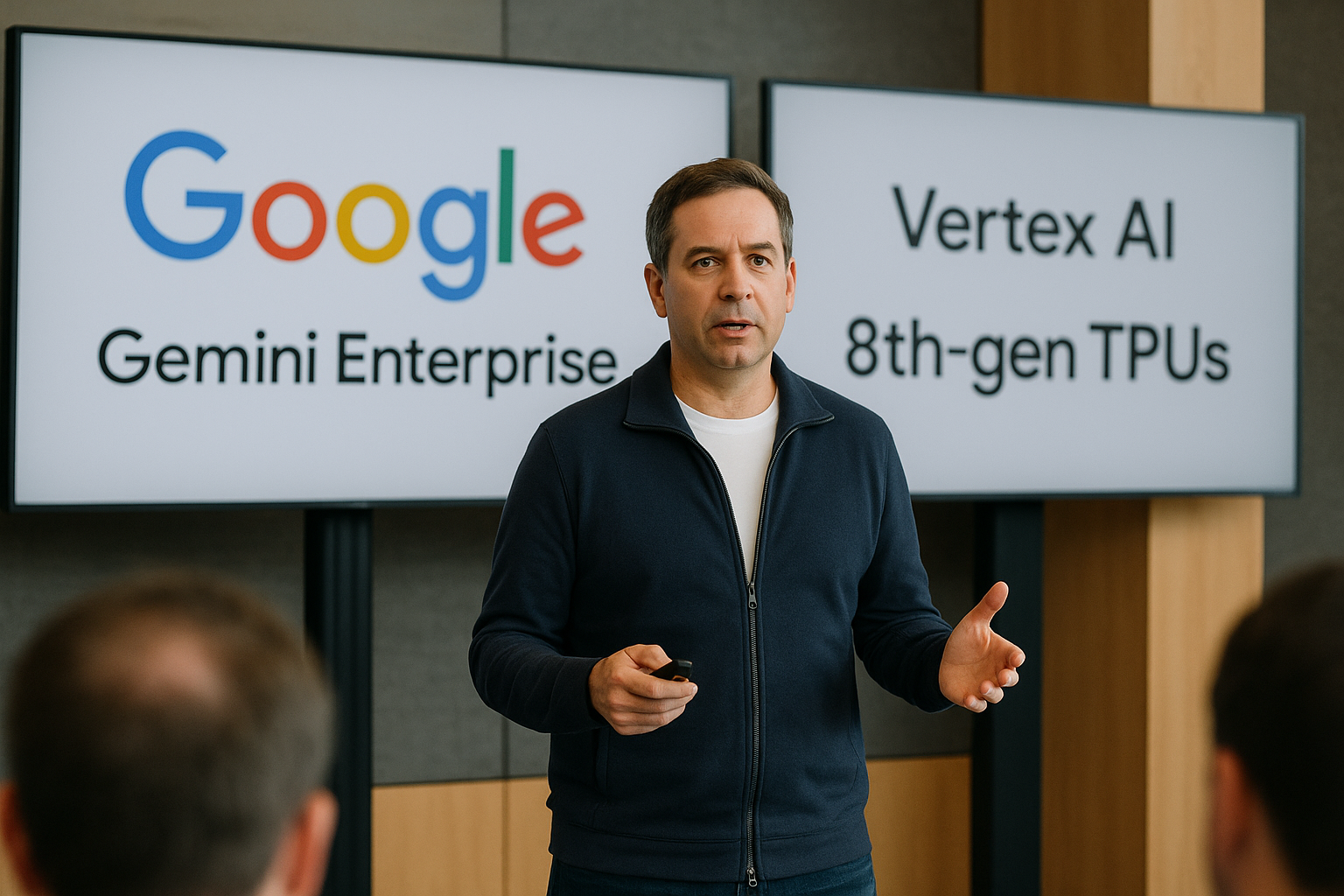
In a major move for enterprise AI, Google Cloud has announced a sweeping consolidation of its AI services under the Gemini Enterprise umbrella, effectively subsuming Vertex AI’s model and agent-building tools into a single, unified platform. The revamped offering includes a new “Inbox” dashboard for managing AI agents at scale, low‑code and code‑first development tools, and enhanced orchestration, security, and observability features.
Key components of the expanded Gemini Enterprise platform include:
- Agent Studio (low‑code) and Agent Development Kit (ADK) for building AI agents
- Agent Runtime for orchestrating multi‑step tasks with persistent context
- Agent Identity, Gateway, and Registry for governance and security
- Agent Evaluation, Observability, and Simulation for post‑deployment monitoring and debugging
- Projects feature to integrate enterprise data sources like Google Workspace, OneDrive, and third‑party collaboration tools
- Canvas for co‑creating Google Docs and Slides within the platform, exportable to Microsoft 365 formats
- Interoperability with third‑party agents from Adobe, Salesforce, ServiceNow, and Workday via an integrated Agent Gallery (itpro.com)
Simultaneously, Google unveiled its eighth‑generation Tensor Processing Units (TPUs), available in two variants: one optimized for training new models and another tailored for near‑real‑time inference workloads. This hardware innovation underscores Google’s intensifying competition with Amazon and Microsoft in the enterprise AI infrastructure space (axios.com).
Why it matters: By consolidating AI development, orchestration, and governance into a single platform, Google is simplifying enterprise AI deployment and management. The dual‑flavor TPUs further enhance performance and cost‑efficiency by aligning hardware capabilities with specific AI workloads. Together, these developments position Google Cloud as a more compelling choice for organizations seeking scalable, secure, and integrated AI infrastructure.