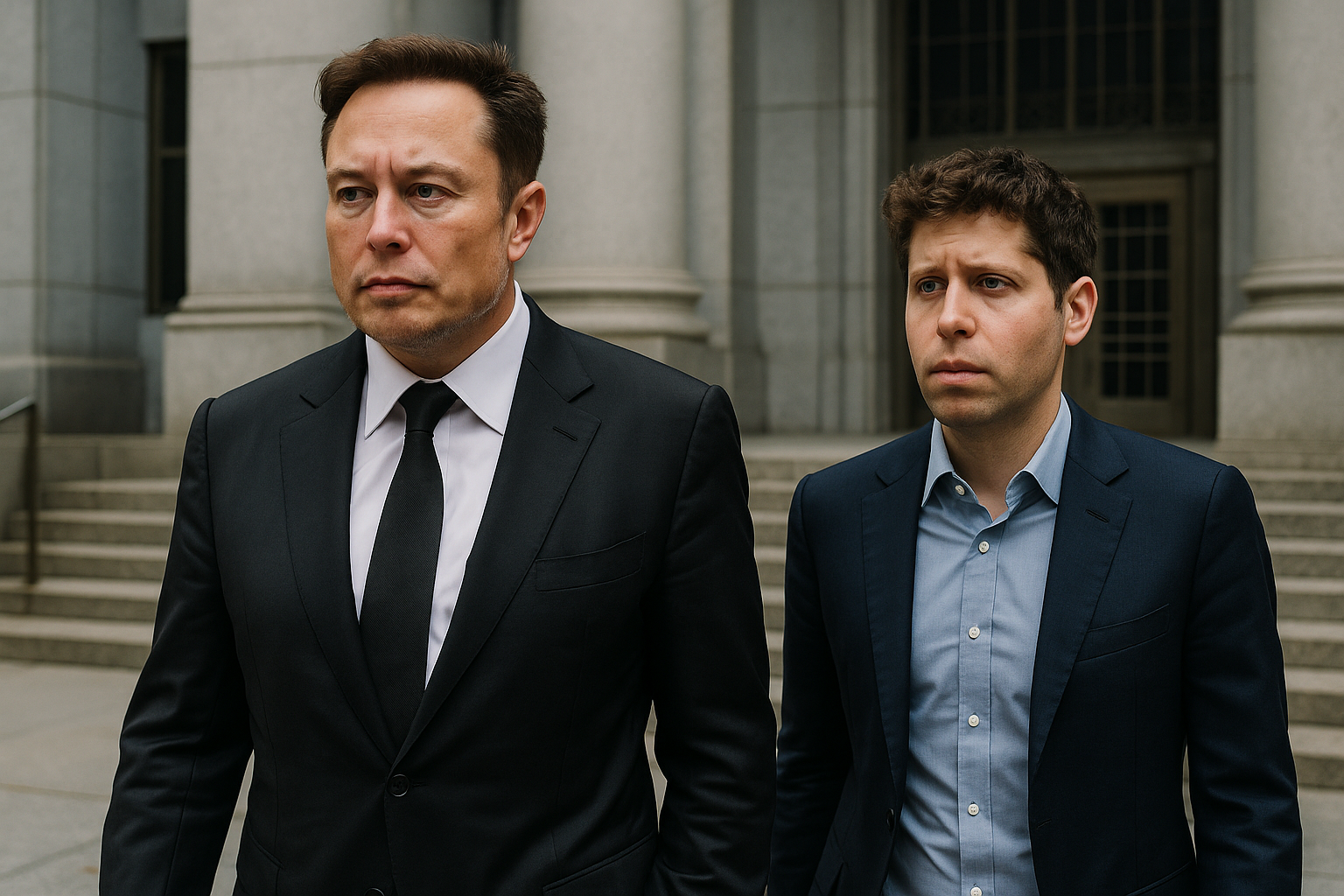
Elon Musk and Sam Altman, two of Silicon Valley’s most prominent figures, are set to square off in a high‑stakes trial beginning Monday, April 27, 2026, in the U.S. District Court for the Northern District of California in Oakland. Jury selection is scheduled to start that day, with opening arguments expected to follow shortly thereafter. The trial is expected to last two to three weeks. (euronews.com)
Musk’s lawsuit, originally filed in 2024, alleges that Altman, OpenAI, its president Greg Brockman, and Microsoft breached the company’s founding agreement by transforming OpenAI from a nonprofit dedicated to benefiting humanity into a for‑profit enterprise. Musk claims he contributed approximately $38–44 million to the nonprofit in its early years and that the shift toward commercialization—especially through a deep partnership with Microsoft—constitutes a betrayal of the original mission. (theguardian.com)
OpenAI has pushed back, releasing internal communications showing Musk’s prior support for the creation of a for‑profit arm and arguing that he agreed to the restructuring as early as 2017. The company has characterized Musk’s claims as motivated by jealousy and regret over his departure from the board in 2018. (theguardian.com)
The trial is expected to feature high‑profile testimony, including from Musk, Altman, and Microsoft CEO Satya Nadella. Musk is seeking remedies that include reversing OpenAI’s for‑profit restructuring, removing Altman and Brockman from leadership, and recovering more than $134 billion in damages to be redirected to OpenAI’s nonprofit arm. (theguardian.com)
Judge Yvonne Gonzalez Rogers is overseeing the proceedings. The trial has been structured in two phases: the first will determine liability, with a jury issuing an advisory verdict; the second, beginning around May 18, will focus on damages and will be decided by the judge. Each side has been allotted 22 hours to present its case, with Microsoft receiving five hours. (lemonde.fr)
This case carries significant implications for the future of AI governance and corporate structure in the industry. OpenAI is expected to go public later this year at a valuation near $1 trillion, and the outcome could reshape how AI companies balance public‑interest commitments with commercial ambitions. (theguardian.com)