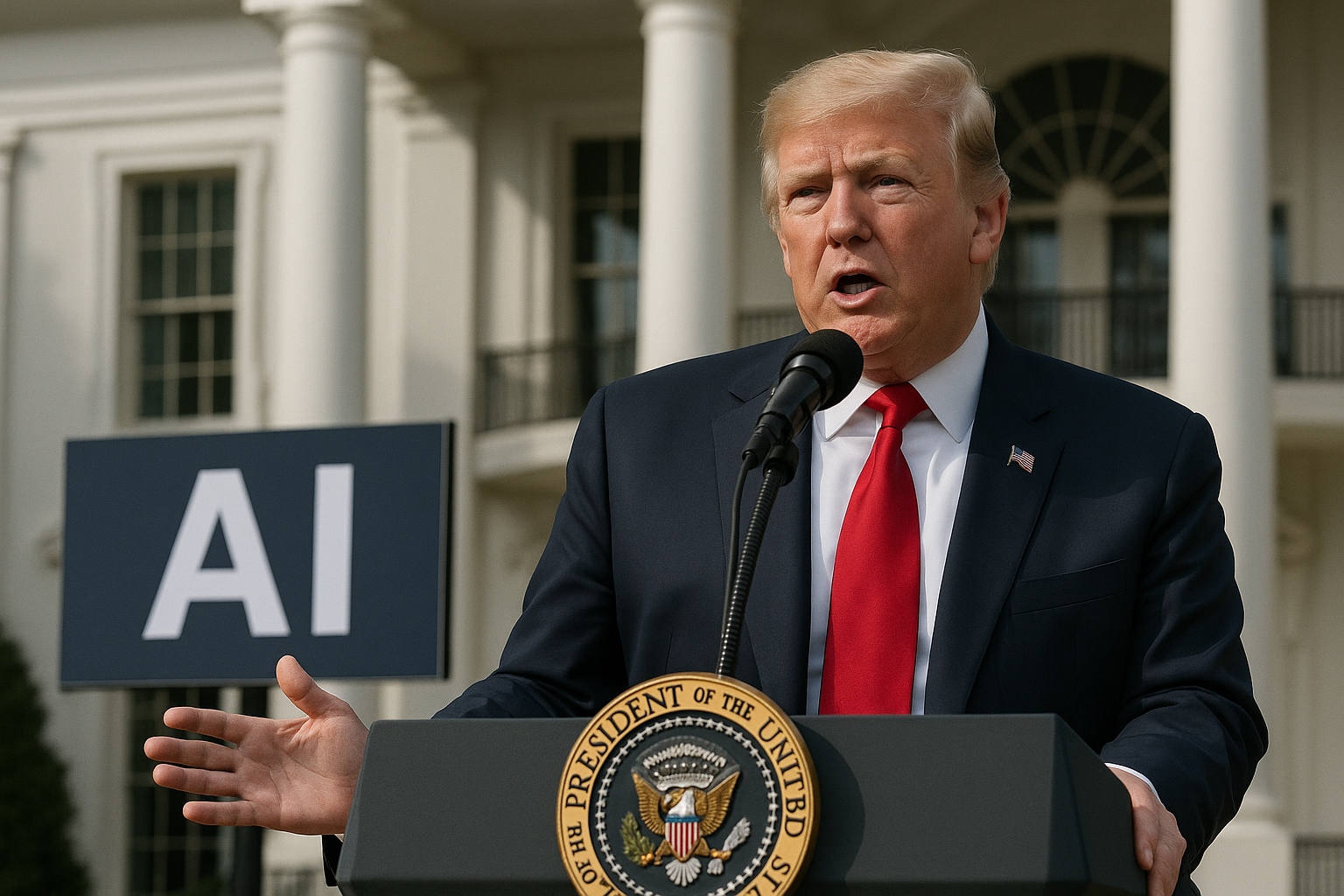
Federal AI Policy Takes Center Stage
In March 2026, the White House released a National AI Legislative Framework, urging Congress to enact a uniform federal policy that would override a growing patchwork of state AI laws. The framework outlines six core principles: protecting children, safeguarding communities and energy costs, respecting intellectual property, preventing censorship, enabling innovation, and preparing an AI-ready workforce. The administration argues that only a consistent national standard can preserve U.S. competitiveness and avoid regulatory fragmentation. (whitehouse.gov)
State Laws in the Crosshairs
The federal push comes amid rising state-level AI regulation. States like California, New York, Texas, and Colorado have enacted laws addressing AI transparency, safety, and consumer protection. The White House framework explicitly calls for preemption of “onerous” state laws, warning that such fragmentation could undermine innovation. (en.wikipedia.org)
Exporting AI as a Strategic Tool
In parallel, the Commerce Department has opened a call for proposals from U.S. companies to export full-stack American AI technology packages—including chips, models, data pipelines, and security—to international partners. The initiative, open through June 30, 2026, is positioned as a strategic move to embed U.S. AI infrastructure globally and reinforce economic and national security ties. (axios.com)
Why It Matters
This dual strategy—domestic consolidation of AI policy and international export expansion—signals a coordinated effort to assert U.S. leadership in AI. By centralizing regulation, the administration aims to reduce compliance burdens for industry and streamline innovation. At the same time, exporting AI systems serves as a soft-power lever, shaping global AI norms without new domestic legislation. (axios.com)
Outlook
The framework now heads to Congress, where bipartisan support exists in principle but legislative hurdles remain. Meanwhile, companies navigating both state and federal AI rules face uncertainty—especially as the federal government signals willingness to challenge state laws deemed too restrictive. (apnews.com)
As the U.S. seeks to define its AI policy identity, the coming months will reveal whether federal preemption and export diplomacy can deliver both regulatory clarity and global influence.