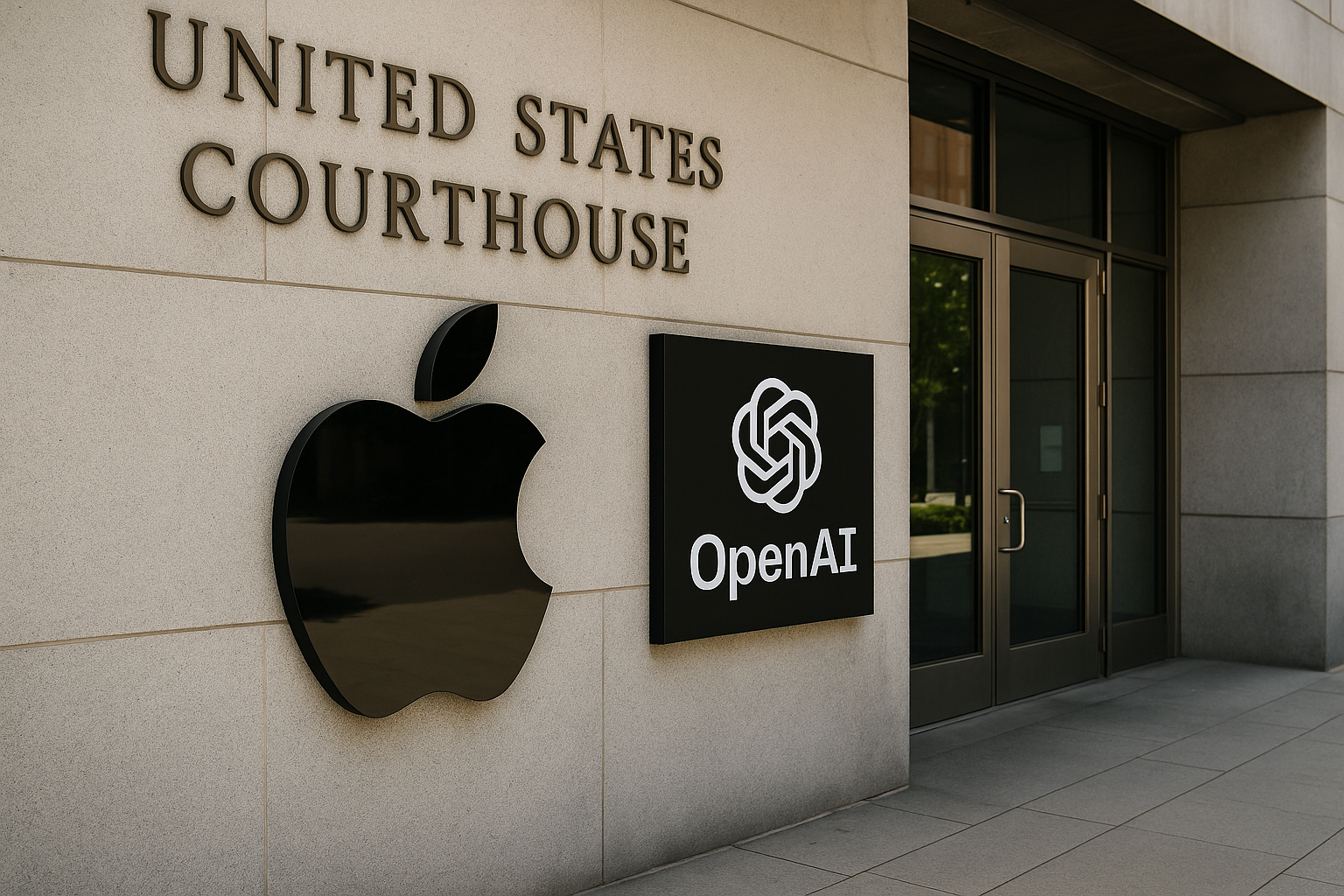
Apple on Friday, July 10, 2026, filed a high-stakes lawsuit against ChatGPT-maker OpenAI in the U.S. District Court for the Northern District of California. The complaint alleges that OpenAI, along with two former Apple employees—Tang Tan, now OpenAI’s chief hardware officer, and Chang Liu, a former Apple electrical engineer—engaged in a systematic effort to steal Apple’s confidential hardware-related information to support OpenAI’s device development efforts. (washingtonpost.com)
According to the filing, Liu retained an Apple-issued laptop after departing and exploited a previously unknown bug to access and download dozens of confidential files, including engineering presentations, technical specifications, and unreleased product data. (washingtonpost.com) Meanwhile, Tang Tan is accused of encouraging Apple employees interviewing at OpenAI to bring actual Apple hardware components—such as batteries and logic boards—for “show and tell” sessions, and of circulating internal Apple offboarding documents to help recruits evade security protocols. (thewrap.com)
Apple characterizes the alleged misconduct as a “coordinated pattern of misconduct at an institutional level,” asserting that OpenAI’s hardware initiative is built on a foundation “rotten to its core” due to its reliance on misappropriated trade secrets. (washingtonpost.com) The company is seeking injunctive relief to bar OpenAI from using or disclosing its trade secrets, the return of any confidential materials, and damages for breach of contract and misappropriation. (techcrunch.com)
The lawsuit marks a dramatic escalation in tensions between the two companies. Apple and OpenAI had previously collaborated in 2024 to integrate ChatGPT into Siri, but the relationship has since deteriorated amid OpenAI’s push into hardware and Apple’s pivot toward Google’s Gemini AI. (bloomberg.com) OpenAI has not publicly disclosed the nature of its hardware plans, though it has described them as a new form of AI interaction beyond traditional interfaces. (washingtonpost.com)
OpenAI responded with a brief statement: “We have no interest in other companies’ trade secrets. We remain focused on building innovative technology that empowers people everywhere.” (washingtonpost.com) As OpenAI prepares for a potential initial public offering, the lawsuit could significantly impact its hardware strategy and public perception. (washingtonpost.com)