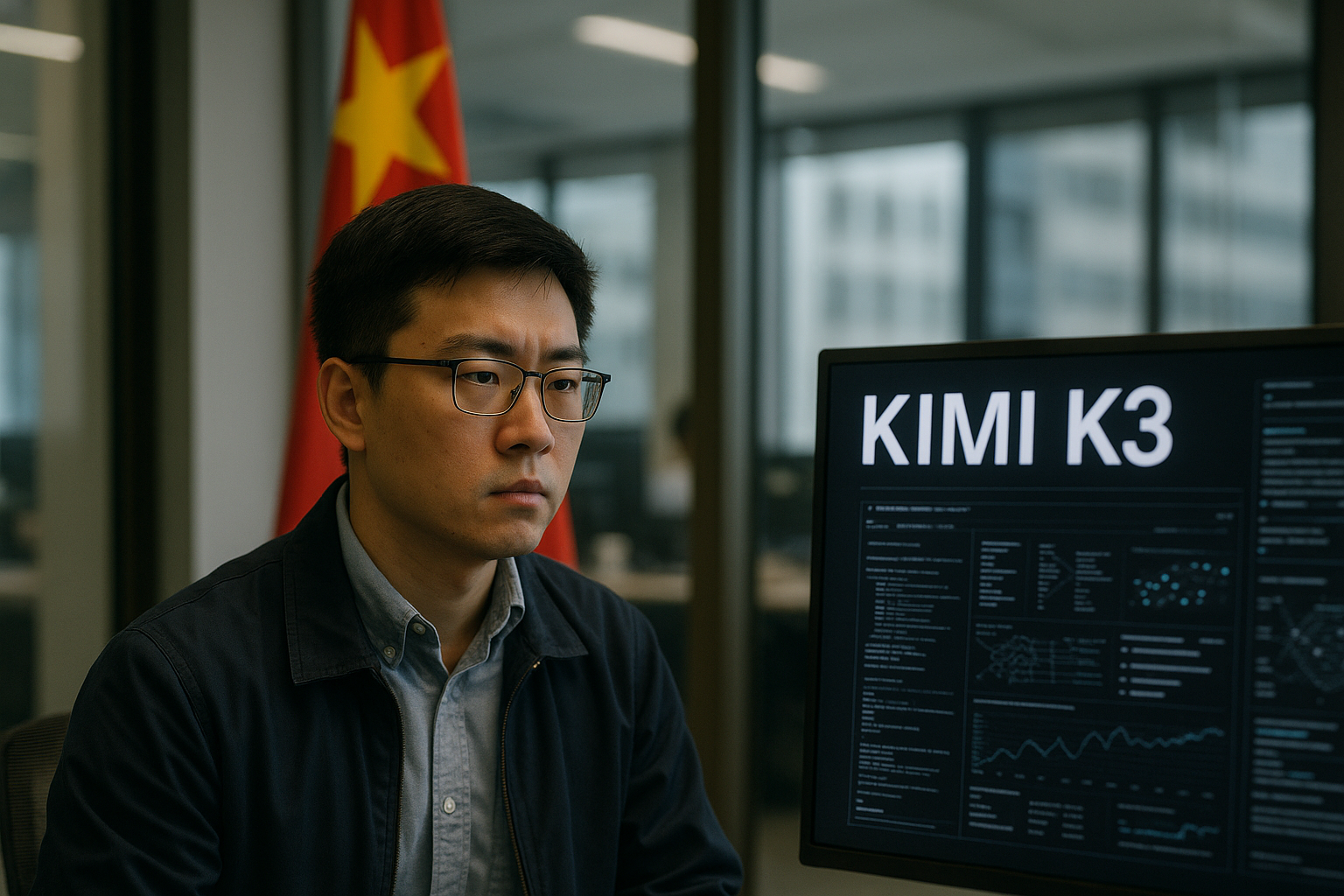
Moonshot AI, a Beijing‑based startup, unveiled its latest large language model, Kimi K3, in mid‑July 2026. With 2.8 trillion parameters, native vision capabilities, and strong performance in coding, reasoning, and cybersecurity tasks, K3 has rapidly become a global talking point. It has even surpassed or matched leading U.S. models such as Anthropic’s Claude Fable 5 and OpenAI’s GPT‑5.6 Sol on benchmarks like Arena’s front‑end coding ranking—while costing significantly less and being released as an open‑weight model that developers can self‑host (scmp.com).
The model’s launch triggered a subscription freeze within days, as demand overwhelmed Moonshot’s compute capacity—highlighting both its popularity and the infrastructure challenges of rapid AI deployment (washingtonpost.com).
In Washington, Kimi K3 has reignited debates over export restrictions, intellectual property, and national security. U.S. officials, including Michael Kratsios of the White House Office of Science and Technology Policy, have accused Moonshot of “distilling” Anthropic’s Fable model—an allegation the company denies (abc17news.com). Meanwhile, investor and White House tech advisor David Sacks warned that K3’s release could signal a loss of U.S. leadership in AI (axios.com).
Analysts say Kimi K3 represents a turning point in the AI race. The gap between Chinese and American frontier models, once measured in months, may now be shrinking to weeks (scmp.com). Aikido Security’s early tests found K3’s cybersecurity performance nearly matched GPT‑5.6 Terra at a quarter of the cost, reinforcing concerns that U.S. safety regulations may be slowing domestic innovation (scmp.com).
The broader implications are significant. Kimi K3’s open‑weight release challenges the pricing power and infrastructure-heavy strategy of U.S. AI labs, while raising questions about the effectiveness of export controls and the future of AI governance (axios.com).
As the U.S. grapples with how to respond—whether through regulation, sanctions, or renewed investment—Kimi K3 stands as a stark reminder that the global AI landscape is shifting faster than many anticipated.