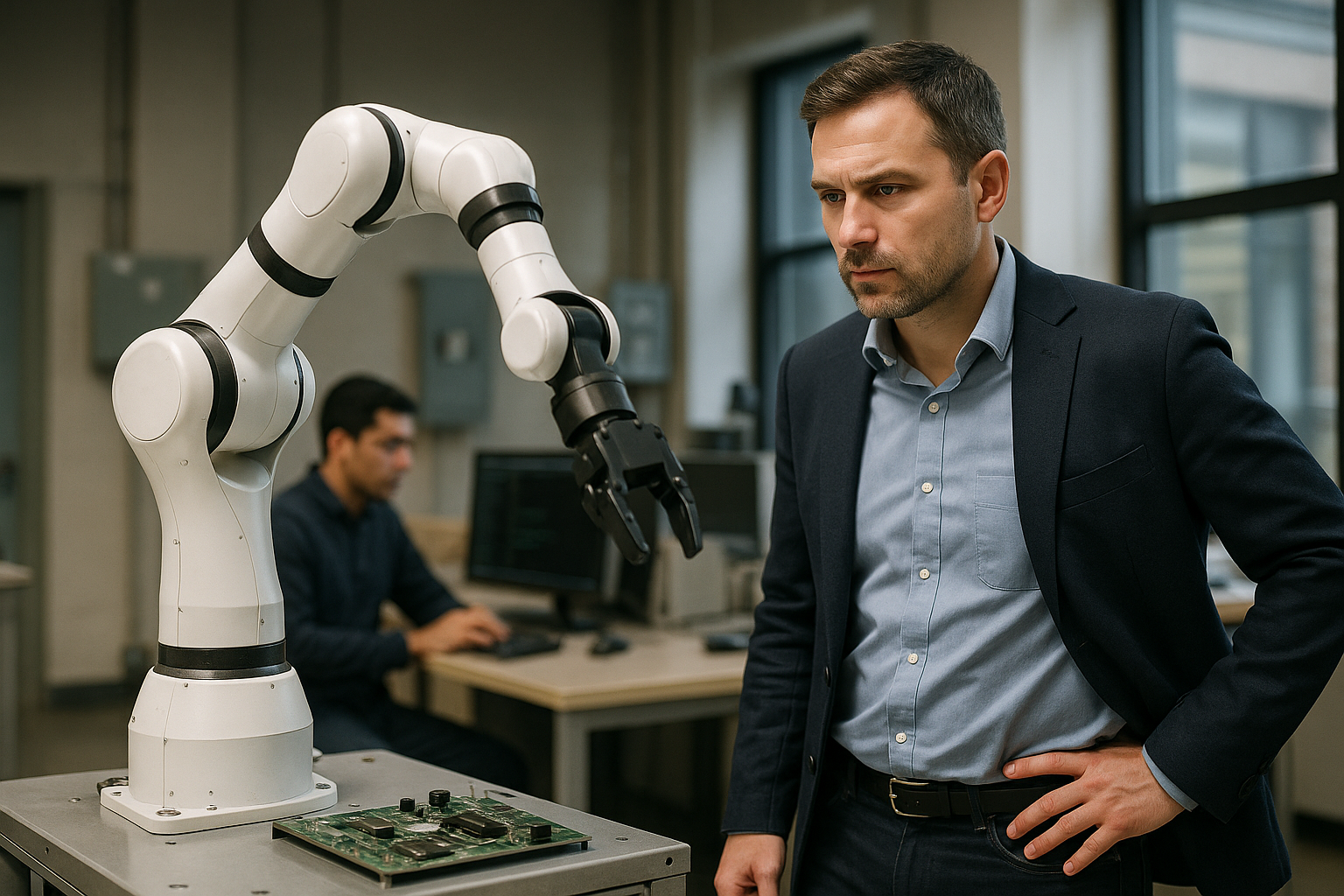
In 2026, the AI arms race has decisively moved beyond the era of chatbots and model benchmarks. The battleground now spans agentic systems, hardware ecosystems, enterprise integration, and strategic geopolitical positioning.
1. From Chatbots to Agentic Workflows The industry is transitioning into what some call the “centaur phase,” where AI agents act autonomously—planning, executing, and iterating on tasks—rather than merely responding to prompts. Tools like OpenClaw give agents “hands” on local machines, enabling them to manage files, run commands, and collaborate with teammates, marking a seismic shift in how AI is deployed in software engineering workflows (axios.com).
2. The Systems War: Beyond Models The race is no longer just about who has the smartest model. It’s now a complex systems war involving compute infrastructure, inference economics, developer lock-in, distribution channels, regulatory resilience, and enterprise trust. Companies like OpenAI, Anthropic, Google, and Meta are each pursuing distinct strategies—from operating systems for agentic work to high-trust enterprise agents and cloud-integrated ecosystems (onehorizon.ai).
3. Full-Stack Integration and Hardware Control The competitive edge now lies in controlling the entire AI stack—from custom silicon and foundational models to applications and hardware devices. OpenAI, for instance, is reportedly poaching hardware talent from Apple and collaborating with its manufacturing partners to develop AI-integrated devices, potentially launching in late 2026 or early 2027 (theinformation.com).
4. Enterprise Deployment and Governance Challenges Enterprises are increasingly adopting agentic AI, but meaningful production deployments remain rare. Most organizations are still grappling with governance, orchestration, and identity management for autonomous systems (forrester.com). Meanwhile, AI usage in enterprises is fragmenting across personal accounts, browser extensions, embedded copilots, and unmanaged tools—creating a sprawling “shadow AI” landscape that traditional governance models struggle to contain (thehackernews.com).
5. Geopolitical Stakes and Strategic Competition The AI arms race has also taken on geopolitical dimensions. At the G7 Summit, leaders from OpenAI, Anthropic, and Google DeepMind met with world leaders to discuss global AI standards and alliances among trusted nations—signaling that the competition now involves ecosystems, sovereignty, and control over intelligence itself (reddit.com).
Why It Matters This new phase of the AI arms race is about more than raw intelligence—it’s about who can build, deploy, and govern AI systems at scale. The winners will be those who control the full stack, integrate deeply into enterprise workflows, and navigate the geopolitical landscape. The era of chatbots is over; the era of agentic systems and strategic ecosystems has begun.