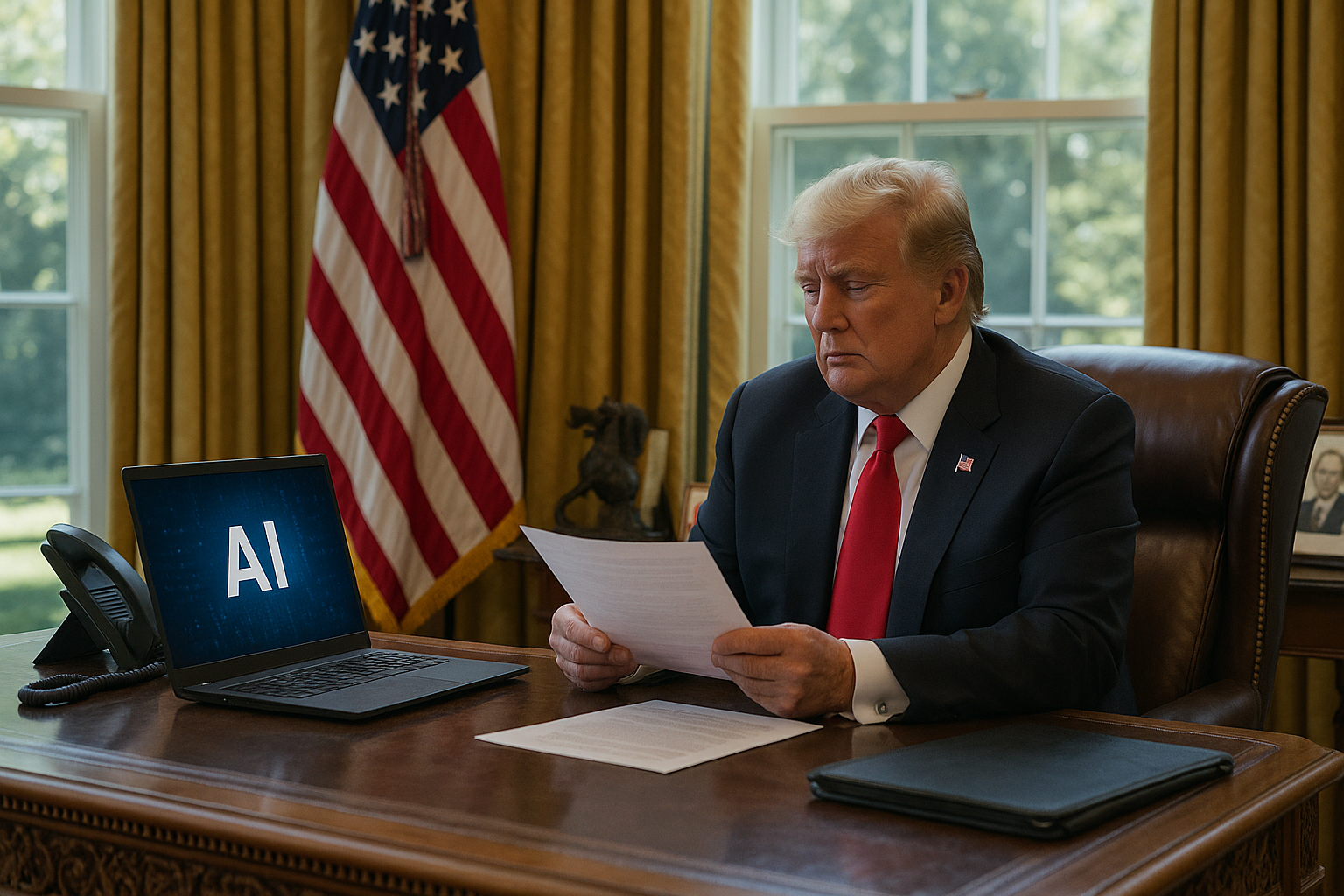
Key Developments in U.S. AI Policy — June 2026
1. Voluntary Pre‑Release Review for Frontier AI Models President Trump signed an executive order on June 2, 2026, establishing a voluntary program requiring AI developers to submit their most advanced models to the federal government for a 30‑day security review before public release. The administration emphasized that this approach avoids burdensome regulation while safeguarding national security. (cbsnews.com)
2. Export Controls on Anthropic’s Mythos and Fable Models In late June, the Commerce Department lifted a two‑week export ban on Anthropic’s Mythos and Fable AI models, allowing global distribution to resume. The temporary restriction had been imposed over national security concerns, particularly the models’ ability to identify software vulnerabilities. (washingtonpost.com)
3. Legislative Momentum: Great American AI Act Discussion Draft On June 4, 2026, House members released a discussion draft of the Great American AI Act. The proposal includes provisions for transparency in frontier systems, independent verification, AI whistleblower protections, and a three‑year sunset on federal preemption of state AI laws. It also tasks NIST with piloting documentation templates for AI models and data. (aigovernancebrief.org)
4. State vs. Federal Regulatory Landscape The U.S. continues to navigate a fragmented AI regulatory environment. While the federal government pushes for a unified framework, several states have enacted their own AI laws. California’s SB 53 and New York’s RAISE Act impose significant penalties for frontier model violations, effective in 2027. Colorado recently repealed its broader AI Act in favor of a narrower disclosure regime. (knowledgelib.io)
5. Sectoral Oversight: Banking Regulators Step In Federal banking regulators, including the OCC and Federal Reserve, have begun requiring banks to map AI usage in high‑risk areas such as lending and sanctions screening. They are probing governance frameworks, human oversight, third‑party risk, and contingency planning. (news.bloomberglaw.com)
Why It Matters
These developments mark a clear shift toward proactive federal engagement in AI governance. The voluntary review mechanism and export controls signal a security‑first posture, while the legislative draft and state law dynamics underscore the tension between innovation and regulation. As AI becomes increasingly embedded in critical sectors, from national defense to finance, the U.S. is laying the groundwork for a layered, multi‑stakeholder governance model.
What’s Next
- Congressional action on the Great American AI Act could define the federal role in AI oversight for years to come.
- State‑federal clashes may intensify as preemption provisions are tested.
- Industry response to voluntary review and export controls will shape compliance norms.
- Sectoral regulators may expand AI oversight into other domains beyond banking.
The U.S. AI policy landscape is evolving rapidly — balancing innovation, security, and governance in real time.